
Red Light Therapy at PhysioWorks: How It Supports Healing, Recovery, and Rehabilitation
New technology in healthcare can sound intimidating, but some of the most effective tools are also some of the simplest. Red light therapy is one of them!
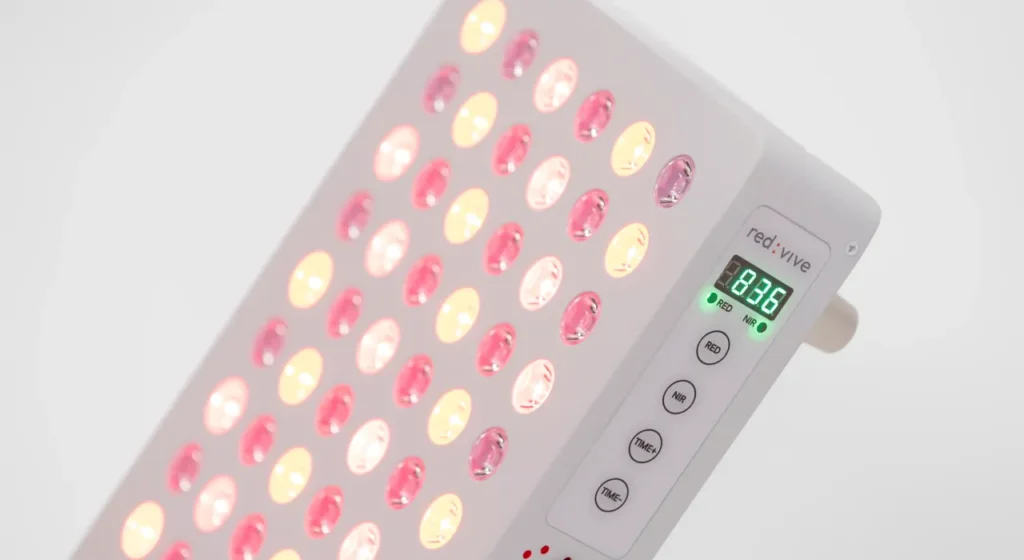
At PhysioWorks, we use Red Vive Red Light Therapy as a supportive treatment to enhance healing, reduce pain, and improve recovery when combined with occupational and physical therapy. While red light therapy is not a replacement for movement or rehabilitation, it can play an important role in helping the body heal more efficiently.
Check out this article below to find out more about what red light therapy is, how it works, and how it fits into a comprehensive physical medicine and rehabilitation plan.
1. What Is Red Light Therapy?
Red light therapy is a non-invasive treatment that uses specific wavelengths of red and near-infrared light to support the body’s natural healing processes. The light is applied directly to the skin over targeted areas such as joints, muscles, or post-surgical tissue. Unlike heat or ice, red light therapy does not rely on temperature. Instead, it works at a cellular level by influencing how cells produce energy and respond to stress.
Red light therapy has been used in medical, athletic, and rehabilitation settings for decades and continues to gain attention due to its safety, simplicity, and growing research support.
2. How Does Red Light Therapy Work?
Red and near-infrared light penetrate the skin and are absorbed by the mitochondria, often referred to as the power centers of our cells. When stimulated by specific wavelengths of light, mitochondria can produce energy more efficiently.
This process may help:
- Improve cellular energy production
- Support tissue repair and recovery
- Enhance local circulation
- Reduce inflammation and swelling
In simple terms, red light therapy helps cells function more efficiently so the body can recover more effectively.
3. Potential Benefits of Red Light Therapy
When used appropriately and as part of a larger treatment plan, red light therapy may provide several benefits.
Commonly reported benefits include:
- Reduced pain and inflammation
- Improved healing after injury or surgery
- Enhanced muscle recovery
- Support for joint mobility
- Improved tolerance to movement during rehab
Many patients describe red light therapy as comfortable, relaxing, and easy to tolerate, even during early stages of recovery.
How Red Light Therapy Supports Physical and Occupational Therapy
Red light therapy is most effective when used alongside guided movement and rehabilitation.
Red light therapy may be used to:
- Prepare tissues before exercise or manual therapy
- Reduce post-treatment soreness
- Calm irritated joints or soft tissue
- Improve tolerance to strengthening or mobility work
- Support healing following surgery
By reducing pain and inflammation, red light therapy can help patients participate more comfortably and consistently in their rehabilitation program.
What Red Light Therapy Does Not Replace
It is important to understand what red light therapy is and is not.
Red light therapy does not replace:
- Physical therapy or occupational therapy
- Strengthening or mobility exercises
- Functional movement retraining
- Progressive loading of tissues
Think of red light therapy as a support tool, not a stand alone solution. Movement, education, and guided rehabilitation are still the primary drivers of recovery!
Patient Scenario: Supporting Rehab Without Replacing It
Sarah, a patient recovering from a recent hand surgery, experienced soreness and stiffness that limited how much exercise and daily activity she could tolerate early in rehab.
Red light therapy was used to help calm inflammation and reduce discomfort before and after therapy sessions. As a result, Sarah was able to participate more consistently in strengthening and mobility exercises, leading to steady progress over time.
The outcome was driven by movement and therapy; Red light therapy helped remove barriers to that progress.
Frequently Asked Questions About Red Light Therapy
Yes. Red light therapy is non-invasive and does not use heat or radiation. It is generally considered safe when used appropriately under clinical guidance.
No. Most patients feel little to nothing during treatment, aside from mild warmth or relaxation.
The number of sessions varies depending on the condition being treated and the overall rehab plan. Your therapist will determine what is appropriate for you.
No. It is a supportive treatment that works best when combined with physical or occupational therapy.
Why We Use Red Vive Red Light Therapy at PhysioWorks
At PhysioWorks, every modality we use is to support functional outcomes. We partner with Red Vive because their red light therapy systems align with our evidence-based, patient-centered approach.
We use Red Vive technology to:
- Support healing and tissue recovery
- Reduce pain that limits movement
- Improve patient comfort during rehab
- Complement physical and occupational therapy goals
Technology is most effective when paired with skilled clinical decision-making and individualized care.