


Your Quick Guide to Work Rehabilitation At PhysioWorks
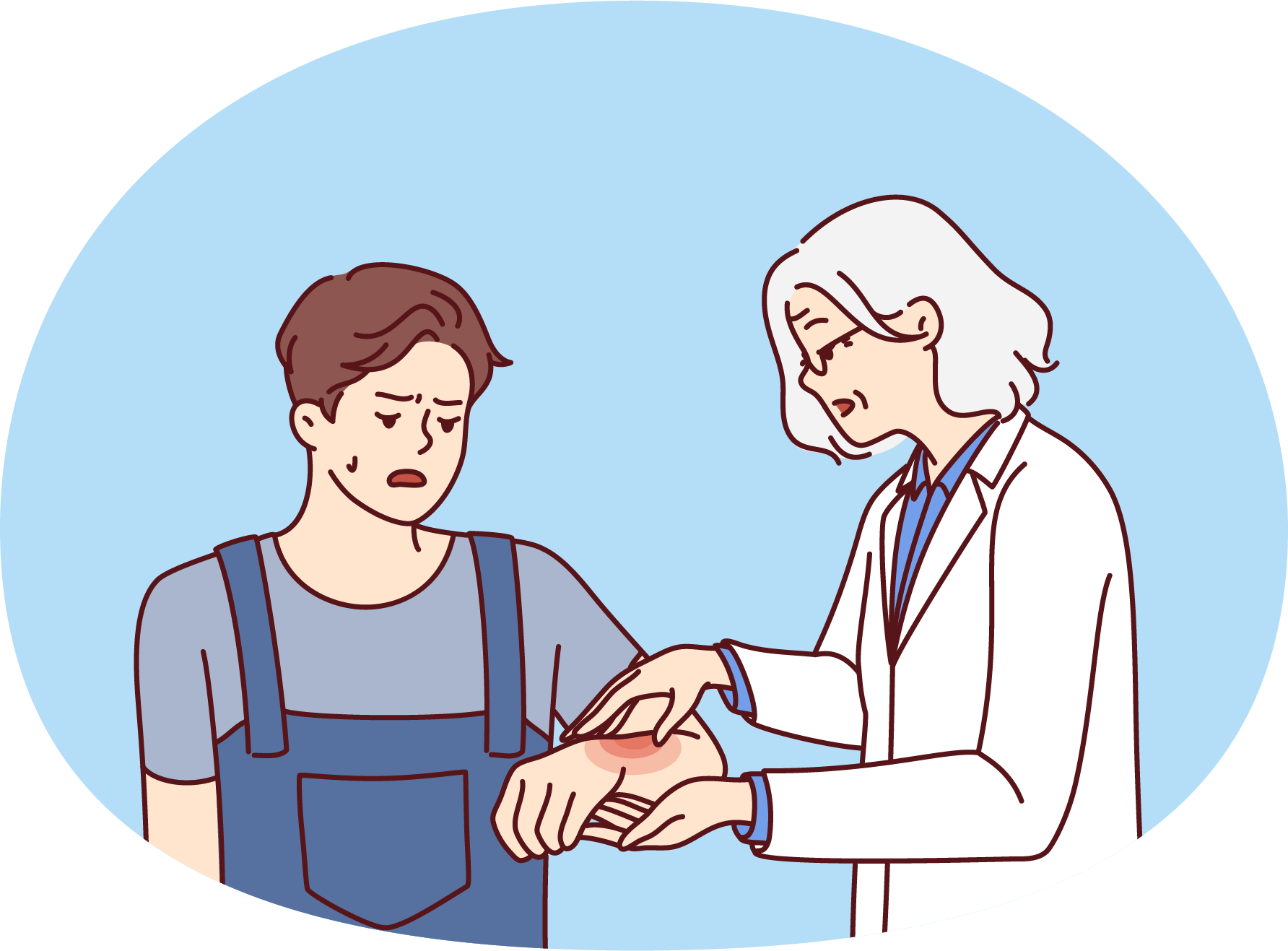
Have you ever suffered an on-the-job injury? Then you probably know that getting back to work takes some time. It’s not just a matter of waiting for the injury to heal–you also have to restore your strength and mobility so you can be sure you’re up for the demands of the job.
Work rehabilitation is a structured process that helps you do exactly that. It bridges the gap between immediate recovery after an injury and your return to work, ensuring you’ve regained the necessary physical capabilities for your specific roles.
To help you better understand work rehabilitation, the PhysioWorks team has developed this comprehensive overview of the program to let you know how it works and who is qualified. However, if you have any specific questions, don’t hesitate to give us a call!

Recovering After a Work Injury: Where Work Rehab Fits In
Rehabilitating after a significant injury occurs in stages:
Acute Care
This stage focuses on stabilizing your injury immediately after it occurs. For example, if you broke a bone, acute care would involve setting the bone in a cast.
Initial Rehabilitation
Once your injury has stabilized, you’ll begin your initial rehabilitation, which involves restoring basic movement and function. Think of this stage as the foundation for work rehabilitation.
Work Rehabilitation
When you’ve successfully recovered your general movement and function, you’re ready to begin preparing for your return to work with tailored exercises, job-specific training, and personalized guidance and education.
Work rehabilitation begins with a comprehensive evaluation of your injury and work-related goals. This step is essential because it helps us design a program that reflects the needs of your job. It also helps us determine which level of intensity will work best for you, as we offer two options at PhysioWorks:
- Conditioning
This is a less intensive program designed for jobs that don’t have high physical demands (such as forklift operators). It typically lasts 2-4 hours per day. - Hardening
This is a more intensive program designed for jobs with very high physical demands (such as firefighters or construction workers). It typically lasts 4-8 hours per day.
Return-to-Work
When you finish your work rehabilitation program, it’s time to head back to work–but you need to do so safely! We’ll provide a detailed schedule that ensures you gradually reintroduce your work duties (possibly with some modified tasks) to protect you from reinjury.
Why You Should Consider Participating in Our Work Rehabilitation Program
Provides a Safe Return to Work
This is probably one of the most significant benefits. Our work rehabilitation programs help ensure you are both physically and mentally prepared to resume your duties. Returning to work before you’re ready can lead to long-term complications and possibly reinjury, so you want to make sure you’re in top shape.
Helps Prevent Injuries
The education component of our work rehabilitation programs will help you avoid future injuries. Depending on your job, we can guide you through ergonomic adjustments, form corrections, and other strategies to keep you safe on the job.
Builds Your Confidence
An on-the-job injury can definitely throw you off your game. Our programs focus on restoring the specific skills needed for your job in a controlled environment. By the time you’re back on the job site, you’ll know you can do what needs doing.
Who Qualifies for Work Rehabilitation?
Anyone interested in participating in our work rehabilitation programs needs to meet the following criteria:
- You’re rehabilitating from a musculoskeletal injury that impacts your ability to perform your job duties.
- It has been at least 2 months since your date of injury.
- You have a referral from your healthcare provider for our program.
- You’re able to participate in the program at least 2 hours a day, 3-5 days a week (the actual time requirements will vary depending on your program).

Ready to Get Started?
If you’ve recently suffered a work injury and think you would benefit from our program, call PhysioWorks today! Our friendly staff can answer any questions, and we’re excited to work with you to get you back on the job!
Spring Asparagus Risotto
Ingredients:
- 4 cups (1-inch) sliced asparagus (about 1 1/2 pounds), divided
- 3 cups fat-free, low-sodium chicken broth
- 1 1/2 cups water
- 1 tbsp butter
- 2 cups chopped onion (about 1 large)
- 2 cups uncooked Arborio or other medium-grain rice
- 1/2 cup dry white wine
- 1 cup (4 ounces) grated fresh Parmigiano-Reggiano cheese, divided
- 1/4 cup heavy whipping cream
- 1 tsp salt
- 1/2 tsp freshly ground black pepper
Directions:
Place 1 cup asparagus and 1 cup broth in a blender; puree until smooth. Combine puree, remaining 2 cups broth, and 1 1/2 cups water in a medium saucepan; bring to a simmer (do not boil). Keep warm over low heat. Melt butter in a large heavy saucepan over medium heat. Add onion to pan; cook 8 minutes or until tender, stirring occasionally. Stir in rice; cook 1 minute, stirring constantly. Stir in wine; cook 2 minutes or until liquid is nearly absorbed, stirring constantly. Add 1/2 cup broth mixture; cook 2 minutes or until the liquid is nearly absorbed, stirring constantly. Add remaining puree mixture, 1/2 cup at a time, stirring constantly until each portion of broth is absorbed before adding the next (about 30 minutes total). Stir in remaining 3 cups asparagus; cook 2 minutes. Stir in 3/4 cup cheese, cream, salt, and pepper. Transfer risotto to a bowl. Serve with remaining 1/4 cup cheese.
Get Outdoors and Have Some Fun
Dry Needling
With the warmer weather and longer days, getting outdoors is perfect for enjoying recreational activities. Here are some great ways to integrate outdoor activities into your weekly regimen:
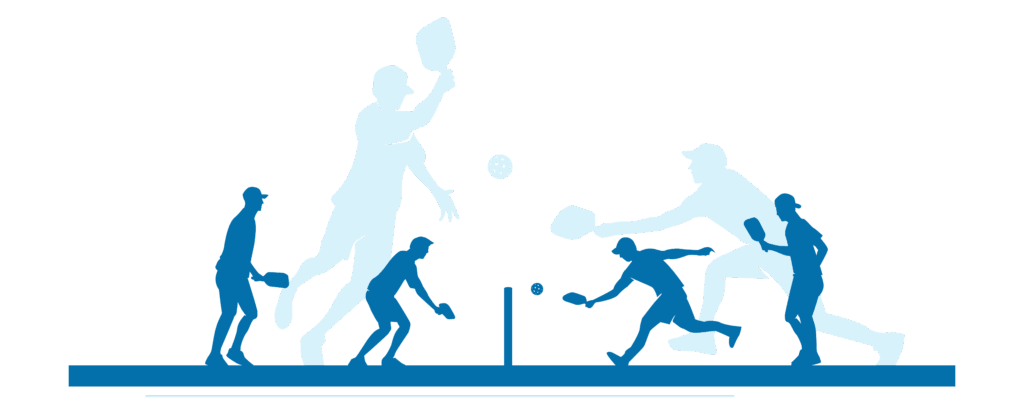
- Pickleball for Agility: This fun and social sport improves balance and coordination. It’s low-impact, making it suitable for all ages and fitness levels.
- Golf for Mobility: Golfing is a great way to enhance mobility, especially in the hips and torso. It’s also a good walk, offering cardiovascular benefits.
- Walking for Endurance: Regular walks can significantly boost cardiovascular health and lower body strength, whether in a park or around your neighborhood.
Always listen to your body and consult your PhysioWorks team to tailor these activities to your needs!
May is your opportunity to get outside, enjoy the sunshine, and take a step towards better health!
Success story
“The entire staff here are fantastic! I am able to work hard safely to heal my injury. They really care about you and how you are doing. It is very easy to make appointments. Some of the staff are bilingual. They also offer massage and chiropractic here. Very wonderful place to strengthen your area of pain.”
– Dayshia.

Share Your Success Story
Love your experience with PhysioWorks? Click the button to leave us a Google review—your feedback helps others find the care they need!
Staff Spotlight

Danny Beeman
CEO, MPT, CFCE, PGAP

Karl Lange
PT, CFCE, Clinic Director

Luda Moskvich
Lead PTA, COEE

Alicia Ables
PTA, CES
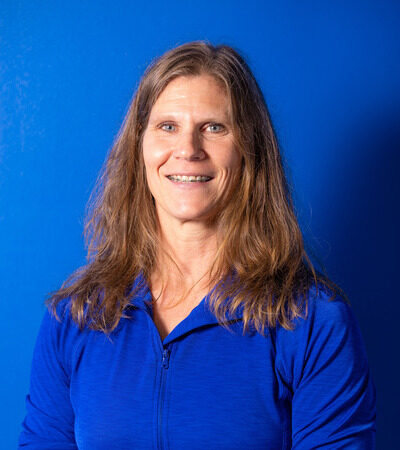



Iryna Hrytsyuk
COTA, Industrial Rehabilitation Supervisor, CI

Natalia Zhuk
COTA/L

Leah Salius
Administrative Supervisor

Michaela Caragiorgio
Billing Supervisor

Sherlyn Dagohoy
Patient Care Coordinator

Jeric Tumaob
Patient Care Coordinator

Michael Kovach
Doctor of Physical Therapy


Christin Hitchcock
Physical Therapist


Cara Thomas
Patient Care Coordinator