


Strength Training Helps You with Osteoporosis
Create Your Own Path To Stronger Bones
Do you ever find yourself worrying about your bone health? Perhaps a family member has been diagnosed with osteoporosis, or maybe you’ve noticed a slight decrease in your height or stooped-over posture. It’s natural to feel concerned, but the good news is that there are effective ways to manage and even improve bone health. One such method that is gaining increasing recognition is strength training with physical therapy.

The Connection Between Osteoporosis and Strength Training
Osteoporosis is a condition characterized by decreased bone mass and density, leading to increased bone fragility and a higher risk of fractures. It affects millions of people worldwide, particularly women after menopause.
Causes of Osteoporosis
The causes of osteoporosis are complex and multifaceted and often include the following:
- Hormonal Changes
- Age
- Genetics
- Gender
Risk Factors
- Family history of osteoporosis
- Low calcium intake
- Vitamin D deficiency
- Smoking
- Excessive alcohol consumption
- Sedentary lifestyle
Symptoms
Osteoporosis can remain asymptomatic until a fracture occurs. However, there may be subtle signs, such as:
- Gradual height loss
- Stooped posture
- Increased susceptibility to fractures, even from minor falls
If you suspect you may have osteoporosis or are at risk, it’s crucial to seek medical evaluation and guidance.
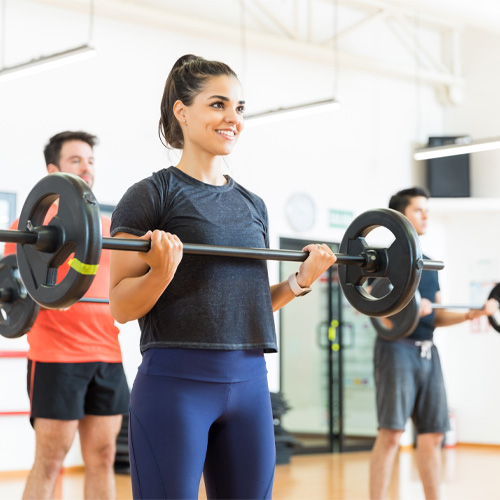
Strength training with physical therapy techniques involves using weights, resistance bands, or body weight to stimulate muscle and bone growth. When you engage in strength training exercises, you create a mechanical load on your bones, stimulating bone cells called osteoblasts to build new bone tissue, which increases bone mass and strength. Furthermore, strength training improves muscle mass and balance, which helps reduce the risk of falls and fractures.
Personalized Strength Training Program For Osteoporosis
A 75-year-old woman came to our clinic after being diagnosed with osteoporosis. She had a noticeable decrease in her height as well as has a family history of osteoporosis. She was anxious about the possibility of fractures and falls and was eager to find ways to improve her bone health.
Our physical therapists worked with her to develop a comprehensive strength training program. She started with low-impact exercises using resistance bands and gradually progressed to using weights and bodyweight exercises. Her program focused on strengthening her hips, spine, and core muscles, improving her posture, and increasing her overall strength and balance.
Over time, she noticed significant improvements in her strength and posture and also felt more confident and empowered. Strength training helped to improve her physical health and left a positive impact on her mental and emotional well-being.
Strength Training For Osteoporosis at PhysioWorks
Incorporating strength training into a physical therapy program with our dedicated professionals is a safe and effective way to manage osteoporosis. We will conduct a thorough assessment, considering your medical history, current symptoms, and fitness level. Then we’ll design a personalized exercise program that targets specific muscle groups, focuses on proper form and technique, and gradually progresses in intensity as your strength and endurance improve.
If you or someone you know is struggling with osteoporosis, don’t wait any longer to schedule the first appointment. Our team of experienced physical therapists is here to help you enhance your well-being with stronger bones and improved mobility through a personalized treatment plan that addresses your specific needs and goals.
Remember, it’s never too late to take control of your bone health. Call us today to schedule an appointment and start building a stronger, healthier you!
Exercise of the Month
THREADING THE NEEDLE
Start on your hands and knees in a tabletop position. Slide one arm underneath your body, palm facing up, allowing your shoulder and the side of your head to gently rest on the floor. Feel the stretch through your upper back and shoulder. Hold briefly, then return to the starting position and switch sides.
3 Sets, 30-Second Hold (each side). (Materials needed: floor mat)

Enjoy this hearty New Year’s Black-Eyed Peas for Good recipe — a warm, flavorful dish rooted in tradition and good fortune. It’s the perfect way to start the year with comfort, nourishment, and a little extra luck on your plate!
Enjoy This Healthy Recipe!
New Year’s Black-Eyed Peas For Good Luck
Ingredients:
- 1 pound dry black-eyed peas
- 2 tablespoons olive oil
- 1 large yellow onion, diced
- 2 cloves garlic, minced
- 8 cups water
- 2 (32 ounce) cartons chicken broth
- 1 pound smoked ham hocks
- 1 (14.5 ounce) can diced tomatoes
- 5 pepperoncini peppers
- ½ teaspoon garlic powder
- ¼ teaspoon ground thyme
- 1 bay leaf
- salt and pepper to taste
Place the black-eyed peas into a large container and cover with several inches of cool water; let soak, 8 hours to overnight. Drain and rinse before using. Heat oil in a large stockpot over medium heat. Add onion and garlic; cook and stir until onion becomes translucent, about 5 minutes. Pour in 8 cups of water and chicken broth; bring to a boil, then reduce heat to a simmer. Stir in soaked black-eyed peas, ham hocks, tomatoes, pepperoncini, bay leaf, garlic powder, thyme, salt, and pepper. Cover and simmer until peas are tender, ham meat is falling off the bones, and the broth is thickened, about 3 hours.
January Word Scramble
ioiearbnhtn
aoceeibrtln
seaeynwr
sneuoloirt
iplcmosy
orkrfsiwe
Answer Key
hibernation
celebration
new years
resolution
olympics
fireworks


5 Health Tips For The New Year
1. Shop Well For Yourself. It is more important than ever to stock your kitchen with healthy foods. Have healthy snacks handy. The more convenient they are, the more likely you are to eat them. Instead of thinking about what you shouldn’t eat, promise to eat your 3 to 5 servings of vegetables each day.
2. Schedule Your Exercise. Your schedule will be very hectic this year, like every year. Schedule your workouts just as you would any other appointment. It’s okay if you can’t make it to class, but make sure that you get some activity in at least three days per week.
3. Just Say No. You probably aren’t aware how much extra food you consume just from people offering it to you. A sample at the market here, an extra cookie at an office party there and it all adds up. Just think twice before you take that food and decide if you really want it.
4. Skip the Baking. Do you make baked goods for giving? Chances are you eat much of what you bake. Who wouldn’t? Instead make non-food gifts, or prepare ingredients for baked goods and put them in pretty jars—this year, let your gift recipient bake it up. That way, they can eat it when they want it and you don’t have to be tempted in the kitchen.
5. Hydrate. Keep your water bottle with you at all times. You should be drinking eight 8-ounce glasses of water each day. One handy trick is to buy a 64-ounce water jug. Fill it up in the morning and know that you need to finish it by the end of the day.
Follow Us on Social Media!
Staff Spotlight

Danny Beeman
CEO, MPT, CFCE, PGAP

Karl Lange
PT, CFCE, Clinic Director

Luda Moskvich
Lead PTA, COEE

Alicia Ables
PTA, CES
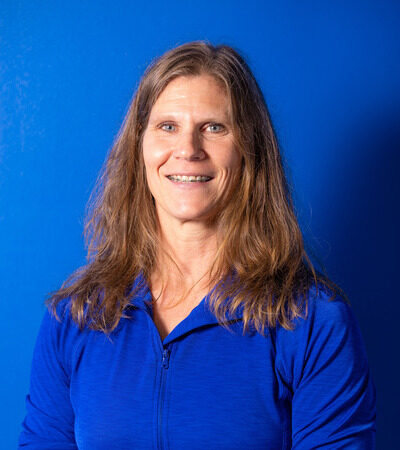



Iryna Hrytsyuk
COTA, Industrial Rehabilitation Supervisor, CI

Natalia Zhuk
COTA/L

Leah Salius
Administrative Supervisor

Michaela Caragiorgio
Billing Supervisor

Sherlyn Dagohoy
Patient Care Coordinator

Jeric Tumaob
Patient Care Coordinator

Michael Kovach
Doctor of Physical Therapy


Christin Hitchcock
Physical Therapist


Cara Thomas
Patient Care Coordinator