


How Strength Training Can Improve Your Health
In the past, many people associated strength training with oiled-up, musclebound bodybuilders — and, as such, decided strength training wasn’t the workout for them. But that idea couldn’t be farther from the truth!
In a way, we get it. Strength training can be incredibly intimidating if you’re coming at it cold: you have to grapple with unfamiliar equipment, uncertainty about proper lifting techniques, and confusion about which exercises to perform. But once you find your footing, strength training is one of the best things you can do for your overall health and wellness.
At PhysioWorks, we want to help make strength training accessible to all, regardless of age, health history, or ability level. To help you see the many benefits of strength training, we thought we’d share the stories of two patients: Alisha and Michelle.
Both of these patients are ordinary women in their late 50s. Neither were hardcore athletes, but both discovered the health benefits of strength training.

Alisha: A New Hobby in Middle Age
Alisha first came to see us after she injured her back while working in the garden. Like most older people, Alisha’s muscle mass had been steadily decreasing, and the resulting weakness had ultimately led to her injury.
We provided her with a customized treatment plan, including dedicated strength training focused on Alisha’s core and back. She was surprised by how much she enjoyed the exercises, including how great she felt after completing them.
As her rehabilitation neared completion, Alisha asked her physical therapist for more information about strength training. She had heard it was an important piece of osteoporosis prevention, something that had been in the back of her mind since the condition ran in her family.
We were more than happy to help Alisha out. Her therapist helped her develop a general strength training program using barbells and dumbbells. He walked her through each exercise, assessed her lifting form, and guided her on gradually increasing intensity.
The result? Alisha found a new hobby. She became an avid weightlifter, hitting the gym three times a week. Even better, she restored some of her lost muscle mass, and her garden activities became easier over time.
Michelle: A Resistance to Resistance Training
Michelle had developed osteoarthritis in her hips in her mid-50s. Although the pain wasn’t severe, she did find herself becoming less active than she’d prefer. Eventually, she contacted us for help managing and slowing her condition.
Regular exercise is one of the best ways to manage osteoarthritis pain, but Michelle was nervous about doing anything too strenuous — including strength training. She was especially wary of anything involving heavy weights.
However, strength training is an important piece of osteoarthritis management. Strong muscles stabilize and support the impacted joints, helping to relieve pressure (and symptoms).
Michelle’s physical therapist was sympathetic to her concerns, especially since low-impact exercises are generally better for people with osteoarthritis. To that end, she suggested Michelle start with a daily walking regimen, which would help get her used to physical activity while still building some muscle strength and endurance.
After a few weeks, Michelle’s therapists started her on simple bodyweight exercises that wouldn’t put too much pressure on her knee joints. They weren’t as difficult or painful as Michelle feared, and she eventually decided she wanted to add a little more resistance after all.
But she didn’t go all in with heavy barbells, as Alisha had. Instead, Michelle used a blend of resistance bands and light dumbbells. Her therapist provided the necessary guidance — and before Michelle knew it, she was performing strength training routines twice a week.
The result? Less pain and stiffness from Michelle’s arthritis meant more mobility and an easier time running errands, doing chores, and spending time with her loved ones.

How Will Strength Training Benefit You?
Good health means different things to different people. At PhysioWorks, we focus on improving your overall function so you can do the things in your life that matter most. Whether you want to kickstart an intense strength training program (like Alisha) or simply ensure you’re meeting the CDC’s recommendation of 2 days of muscle strength work a week (like Michelle), we’ve got you covered.
Call us today to get started on your strength training journey!

One-Pot Creamy Tuscan Pasta
Ingredients:
- 2 tablespoons unsalted butter
- 1 shallot, minced
- 4 garlic cloves, minced
- 2 tablespoons tomato paste
- 1 teaspoon dried oregano
- 1 teaspoon paprika
- 2 cups chicken broth
- 1 cup whole milk, or more as needed
- 8 oz penne pasta
- 1 cup cherry tomatoes, halved
- ½ cup sun-dried tomatoes in olive oil, julienne-style, drained
- kosher salt, to taste
- freshly ground black pepper, to taste
- 1 cup fresh baby spinach
- ½ cup grated parmesan cheese
- 2 tablespoons chopped fresh Italian parsley
Directions:
- In a large skillet, add the butter, shallot, and garlic; cook, stirring frequently, for 3-4 minutes, until softened.
- Add the tomato paste, oregano, and paprika. Cook and stir for 2 minutes, or until the tomato paste starts to darken.
- Add the chicken broth, milk, pasta, cherry tomatoes, and sun-dried tomatoes; season with salt and pepper.
- Bring to a boil, then reduce heat and simmer, stirring occasionally, for 18-20 minutes, until the pasta is tender yet firm to the bite.
- Remove from heat and stir in the spinach and Parmesan cheese until the spinach is wilted and the cheese is incorporated.
- If the mixture is too thick, add more milk as needed until the desired consistency is reached.
- Garnish with parsley and serve hot.
Staff Spotlight!
Ezra Sauter
(OT, CFCE, PGAP, Director of Industrial Rehab)

Born and raised in Minneapolis, Minnesota, Ezra obtained a Masters of Occupational Therapy Degree at the University of Texas Health Science Center in San Antonio. As an integral part of building PhysioWorks’ industrial rehab program, Ezra also completed his Functional Capacity Evaluator and PGAP certification. He works directly with every patient involved in our industrial program which includes patient evaluation, developing an individualized rehab strategy, and implementing the rehab plan. He monitors his team and his patients on a daily basis and has a passion for helping people get through difficult times to help return them back to their meaningful activities. Outside of work, Ezra has an active lifestyle and enjoys fitness, skiing in the mountains, and playing music. He is an avid Minnesota Timberwolves fan and has a weakness for cookie dough ice cream.
Exercise of the Month
Standing Waiter’s Bow with Weights
Start by standing up straight with your arms hanging by your sides and a dumbbell in one hand. Place your other hand on your lower back to monitor your muscle activation. Slowly hinge forward at your hips keeping your back flat until you are at the point where your back will round if you go any further. Allow your weighted arm to hang forward as you hinge. Slowly hinge back up. 3 sets, 10 reps, hold.


Service Spotlight
Dry Needling
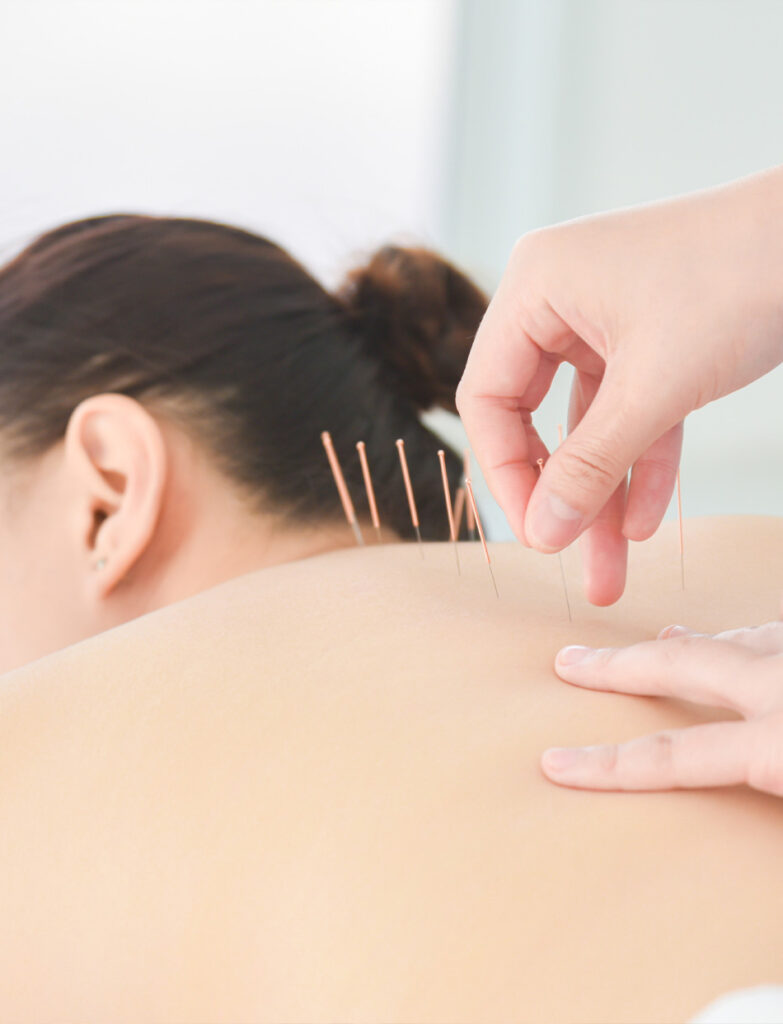
Is pain holding you back from starting an exercise routine? Are you an athlete recovering from an injury? Dry needling can help you get back to your active lifestyle!
Dry needling, an advanced physical therapy technique, involves the insertion of a thin needle into a trigger point in your muscles. The technique is designed to stimulate the underlying myofascial trigger points and muscular and connective tissues, helping manage numerous pain and mobility issues.
Dry needling can be a game-changer in treating both acute and chronic conditions. It can help to reduce pain and improve function, sometimes in cases where other treatment methods have failed. Studies have shown dry needling to be an effective treatment for reducing pain intensity, increasing motion range, and improving function.
Don’t let pain hold you back. Call us today to get started!
May Word Scramble
awelwmrno
gyaubdl
mapdloi
wohessr
efalitsv
rnidarsop
Answer Key
lawnmower
ladybug
diploma
showers
festival
raindrops

Have you been wanting to get into gardening, but don’t have the yard space? Consider planting a potted herb garden!
Container gardening is easy, convenient, and leaves you with a supply of beautiful fresh herbs. Almost any herb can be grown in a container, so the possibilities are endless!
Here are a few tips and tricks to ensure your potted herb garden is successful this spring:
1. Be mindful of what you plant.
One of the exciting things about a potted herb garden is that you can grow as many different types of herbs as you want in the same container. However, before you start planting, be sure to do some research on the sun, water, and soil requirements of each herb.
For example, rosemary prefers hot and dry conditions, whereas parsley requires consistent moisture. As a result, they would not get along in the same pot.
2. Choose the right container.
As long as it has good drainage, you can use almost anything as an herb container. However, it’s important to be aware that using smaller pots means you need to be extra cautious in how much you water your herbs. Too much or too little water can be especially detrimental to an herb in a small pot.
3. Use high quality soil.
The best way to ensure a healthy start to your container garden is by using high quality soil. Container soil should be lighter in density than traditional garden soil. You can also add organic matter, like perlite or peat moss, to the mixture to improve drainage and moisture retention.
We hope you’re feeling ready to get started on your potted herb garden this spring. Remember to have fun and good luck!

Follow Us on Social Media!
Staff Spotlight

Danny Beeman
CEO, MPT, CFCE, PGAP

Karl Lange
PT, CFCE, Clinic Director

Luda Moskvich
Lead PTA, COEE

Alicia Ables
PTA, CES



Iryna Hrytsyuk
COTA, Industrial Rehabilitation Supervisor, CI

Natalia Zhuk
COTA/L

Leah Salius
Administrative Supervisor

Michaela Caragiorgio
Billing Supervisor

Sherlyn Dagohoy
Patient Care Coordinator

Jeric Tumaob
Patient Care Coordinator

Michael Kovach
Doctor of Physical Therapy


Christin Hitchcock
Physical Therapist


Cara Thomas
Patient Care Coordinator