


Is Your Core the Missing Link in Your Back Pain?
Back pain can certainly be a struggle to manage. You may feel like you’ve tried everything, from resting to over-the-counter pain medications. But this may be a crucial area you have considered yet: your core.
People often want to blame their back pain on their spine, but the spine doesn’t work alone. It relies on a deep system of muscles in your abdomen, hips, and pelvis for support, what’s collectively known as the core. When those muscles are weak or poorly coordinated, your back absorbs more strain than it should.
The good news? Core strength is something you can improve. And when you do, your back often feels the difference.
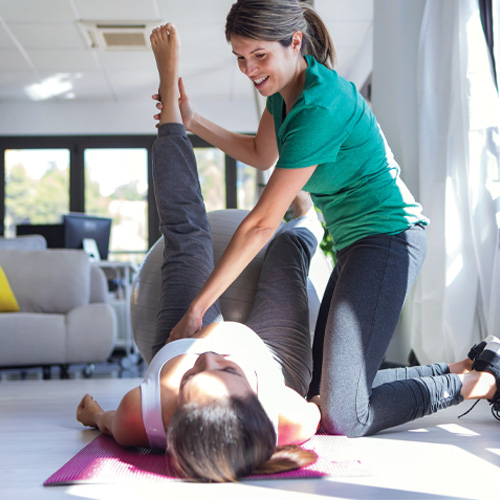
The Connection Between a Weak Core and Back Pain
Many people associate their core with six-pack abs, but in reality, this group of muscles helps stabilize your spine during movement. People with ongoing back pain often issues with one or more of their core muscles, such as:
- Delayed activation of deep abdominal muscles
- Reduced endurance in trunk stabilizers
- Poor coordination between the hips and spine
- Muscle imbalances that shift load onto the lower back
As a result, their spine moves more than it should, causing the ligaments in the spine to take on more stress. Larger core muscles tighten up to compensate, fatigue sets in faster, and over time, pain and irritation set in.
That’s why a strong core isn’t so much about having a visible six-pack as it is about good stability. Improving your ability to coordinate and time muscle activation helps reduce back pain and improve function for everyday tasks, like bending, lifting, and sitting.
A Closer Look at How Building Core Strength Reduces Back Pain
Improves Spinal Stability
A stable spine reduces excessive motion that irritates joints and soft tissues.
Distributes Forces More Evenly
Instead of your lower back absorbing most of the load, your hips and trunk share the work.
Enhances Posture and Alignment
Strong stabilizers help maintain neutral alignment during sitting, standing, and lifting.
Increases Endurance
Better muscle endurance means less fatigue and fewer flare-ups during daily activity.
Restores Confidence in Movement
When your body feels supported, you move with less guarding and tension.
How PhysioWorks Can Help You Build a Stronger Core
Our team will work closely with you to create a personalized core strengthening program that meets your needs. Because core weakness often shows up during functional movements, we’ll connect exercises directly to what matters most, whether that’s work, family, and daily life.
Dead Bug Variations
These exercises train the deep abdominal muscles to stabilize the spine while the arms and legs move, reinforcing coordination between the trunk and limbs. This mimics real-life movement patterns such as reaching or walking, all while maintaining spinal control.
Bird-Dog
Bird-dog builds cross-body stability, which teaches your back and hips to work together. That coordination reduces excessive spinal motion during bending and lifting.
Side Plank
Side planks strengthen the lateral trunk stabilizers, including the obliques and deep internal muscles that support the lower back. Together, they control side-to-side movement and prevent collapse during walking or carrying weight.
Glute Bridges
Weak glutes often cause the lower back to compensate during standing and lifting, so strengthening them reduces strain on the lumbar spine.
Stronger Core. Better Movement. Less Pain.
At PhysioWorks, we know that back pain often feels unpredictable. But many cases share a common thread: poor stability and endurance in the muscles that protect the spine.
Building core strength helps address these concerns directly by improving control, reducing strain, and increasing resilience throughout your midsection. So if your back has been asking for attention, your core may be the place to start.
Just remember that you don’t have to do it alone. The team at PhysioWorks is ready to help you build that foundation so you can move freely, return to work safely, and get back to doing what matters most.

Exercise of the Month
LOWER TRUNK ROTATIONS
Start by lying face up on the floor with your knees bent. Allow your knees to slowly drop to one side. Your lower back should rotate, but your shoulders should stay flat on the ground. Hold for 30 seconds. Bring your knees back up and then drop them to the opposite side.
2 Sets, 2 Reps.


Fresh, flavorful, and light, this Mediterranean Chicken Salad is the perfect springtime meal that makes healthy eating feel effortless. Packed with bright ingredients and satisfying protein, it’s ideal for enjoying warmer days and staying energized.
Enjoy This Healthy Recipe!
Mediterranean Chicken Salad
Ingredients:
- 1 cup lemon juice
- 2 tbsp snipped fresh mint
- 2 tbsp snipped fresh basil
- 2 tbsp olive oil
- 1 tbsp honey
- ¼ tsp black pepper
- 5 cups shredded romaine lettuce
- 2 cups cut-up cooked chicken breast
- 2 plum tomatoes, cut into wedges
- 1 (15 oz) can garbanzo beans
- 2 tbsp pitted Kalamata olives
- 2 tbsp crumbled reduced-fat feta cheese
- 6 Whole kalamata olives
In a screw-top jar, combine lemon juice, mint, basil, olive oil, honey, and black pepper to make dressing. Cover and shake well. Place lettuce on a large platter. Top with chicken, tomatoes, garbanzo beans, the quartered olives (if using), and feta cheese. Drizzle with dressing. If desired, garnish individual servings with whole olives.
April Word Scramble
olofs
rwhesso
sutpli
aiprodsnr
tlaeacprilr
angrde
Answer Key
fools
showers
tulips
raindrops
caterpillar
garden

Spring Is Running Season! Are You In Your Best Shape?
Are you looking forward to starting running again after a long winter? At PhysioWorks, our therapists understand running injuries, and we will make sure you run pain-free this spring!
Runners are often misled into believing unproven solutions to avoiding pain and injury. Not many people know that the number-one risk factor for runners to sustain an injury is having had an injury in the last 12 months.
The other most common risk factors are:
- Running experience of 0–2 years
- Restarting running after extended rest
- Overtraining (i.e., more than 40 miles per week)
To ensure you can get back to running or increasing your mileage without pain or injury, start with an injury evaluation and a biomechanical assessment to identify any factors that could contribute to pain or injury.
Our therapists will take a thorough history to understand your training schedule, previous injuries, and overall health status. We use this information to create an individualized program to alleviate pain and get you back to running without limits.
Follow Us on Social Media!
Staff Spotlight

Danny Beeman
CEO, MPT, CFCE, PGAP

Karl Lange
PT, CFCE, Clinic Director

Luda Moskvich
Lead PTA, COEE

Alicia Ables
PTA, CES



Iryna Hrytsyuk
COTA, Industrial Rehabilitation Supervisor, CI

Natalia Zhuk
COTA/L

Leah Salius
Administrative Supervisor

Michaela Caragiorgio
Billing Supervisor

Sherlyn Dagohoy
Patient Care Coordinator

Jeric Tumaob
Patient Care Coordinator

Michael Kovach
Doctor of Physical Therapy


Christin Hitchcock
Physical Therapist


Cara Thomas
Patient Care Coordinator