


Relieve Your Arthritis Pain with Physical Therapy
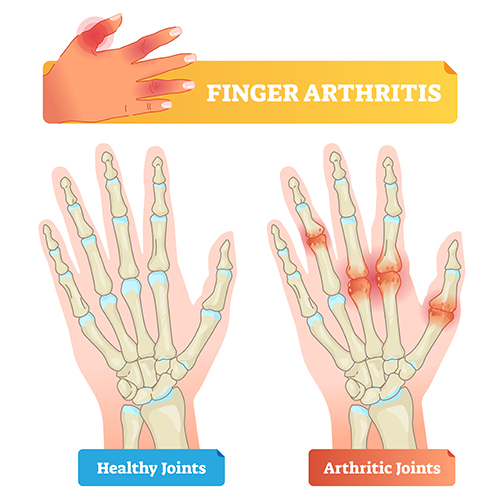
Do you wake up with stiff joints and find it difficult to get moving in the morning? Do you notice your hands have a dull or burning pain, especially after periods of increased use, such as gripping or grasping? You may be experiencing arthritic pain.
Fortunately, at PhysioWorks, our physical therapists can teach you how to improve your motion and manage your pain!
Arthritis is one of the leading causes of disability across the United States, affecting tens of millions of people every day. While it is possible for arthritis to develop in any joint, it most commonly affects the neck, back, hands, hips, and knees. Arthritis can range from mild to severe, and severe cases can lead to chronic pain and impact your quality of life.
At PhysioWorks, our therapists can help identify the severity of your condition and provide you with guidance on resolving your pain, restoring your motion, and getting back to living the life you enjoy!

What Are Two Common Types of Arthritis?
Arthritis is a general term that includes over 100 diseases affecting the joints. The most common are osteoarthritis and rheumatoid arthritis. Approximately 25% of the adult population in the United States suffers from arthritis.
Osteoarthritis (OA) is the most common form of arthritis, and it is known as the “wear and tear” type of arthritis. Its main characteristic is the loss of articular cartilage and joint disability. The breakdown of the cartilage affects the whole joint, causing inflammation, loss of range of motion, and pain.
When worn down, cartilage can no longer act as a cushion and shock absorber for the joints, resulting in bone-to-bone friction and painful inflammation. Typical symptoms include pain, muscle weakness, joint instability, brief morning stiffness, crepitus (i.e., noises like snaps and pops), and physical inactivity.
Rheumatoid arthritis (RA) is slightly different from osteoarthritis, and it is not as well understood. RA is inflammatory arthritis, and the source of joint damage is inflammation. It is the second most commonly experienced form of arthritis, and it develops as an autoimmune response.
When someone has rheumatoid arthritis, their immune system sees the joints as a threat. Because of this, the immune system attacks the joints, resulting in pain and inflammation. Fortunately, physical therapists are skilled at treating this type of arthritis and providing solutions without aggravating your pain.
What To Expect At Physical Therapy

Physical therapy at PhysioWorks helps by improving the motion of your joints, improving the strength of supporting muscles, and improving the way you walk, bend, and move. We also teach you ways to prevent future joint injury and what you can do on your own with the correct therapeutic exercises.
Here are some steps you can take on your own to make sure your daily life is as pain-free as possible:
- Move your joints multiple times a day. Don’t sit for more than 30 minutes.
- Don’t overdo it; stop if you notice swelling in your joints.
- Keep the impact low. Low impact exercises like stationary or recumbent bicycles or exercise in the water reduce the stress on your joints.
- Apply heat to relax your joints and muscles and relieve any pain you have before you begin to exercise. Heat treatments should be applied for about 20 minutes.
- Ice afterward. Apply ice to your joints for up to 20 minutes as needed after activity, especially after activity that causes joint swelling.
Physical activity produces healthier joints and helps you get back to doing activities you enjoy. We recommend you work with your physical therapist to create a treatment plan and update it with a yearly check-up.
Sources: https://www.ncbi.nlm.nih.gov/pmc/articles/PMC3487631/, https://academic.oup.com/rheumatology/article/37/6/677/1783477?login=true, https://link.springer.com/article/10.1007/s10067-020-05054-y
Exercise of the Month
Standing March
Start by standing up straight (place both hands on the back of a chair for support if needed). Slowly lift one knee up towards the ceiling until it reaches hip height and then lower it back down. Do the same with the other leg keeping the abdominals contracted the whole time. Repeat exercise 10 times.



Feel Better by Eating Better!
Heart Healthy Hummus
Ingredients:
- 2 cans (16 oz each) reduced-sodium chickpeas, rinsed & drained except for 1/4 cup liquid
- 1 tbsp extra-virgin olive oil
- 1/4 cup lemon juice
- 2 garlic cloves, minced
- 1/4 tsp cracked black pepper
- 1/4 tsp paprika
- 3 tbsp tahini (sesame paste)
- 2 tbsp chopped Italian flat-leaf parsley
Directions:
Using a blender or food processor, puree the chickpeas. Add the olive oil, lemon juice, garlic, pepper, paprika, tahini and parsley. Blend well. Add the reserved liquid, 1 tablespoon at a time, until the mixture has the consistency of a thick spread. Serve immediately or cover and refrigerate until ready to serve.
Get Moving Again with PhysioWorks!
Don’t let pain dictate your life. Take the first step towards reclaiming your mobility and well-being with our expert support.
Start your journey to a healthier you today.
Staff Spotlight

Danny Beeman
CEO, MPT, CFCE, PGAP

Karl Lange
PT, CFCE, Clinic Director

Luda Moskvich
Lead PTA, COEE

Alicia Ables
PTA, CES




Iryna Hrytsyuk
COTA, Industrial Rehabilitation Supervisor, CI

Natalia Zhuk
COTA/L

Leah Salius
Administrative Supervisor

Michaela Caragiorgio
Billing Supervisor

Sherlyn Dagohoy
Patient Care Coordinator

Jeric Tumaob
Patient Care Coordinator