
Carpal Tunnel Surgery Recovery: What to Expect & Exercises
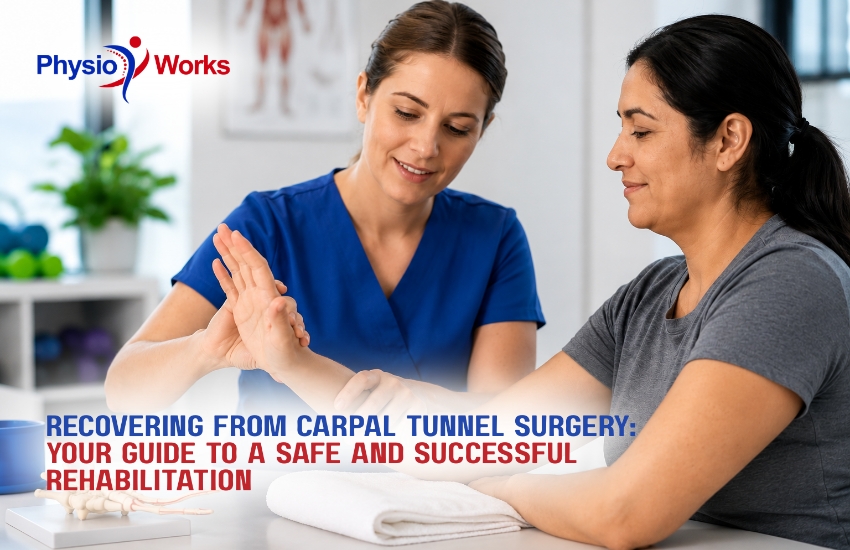
Recovering from Carpal Tunnel Surgery: Your Guide to a Safe and Successful Rehabilitation
Are you scheduled for carpal tunnel surgery, or did you recently have the procedure? It is completely normal to feel a mix of excitement for relief and a little nervous about the recovery process.
When conservative options like nighttime splinting, anti-inflammatory medications, or steroid injections stop providing relief, surgery is often the best next step to protect your hand function. Understanding the timeline for recovering from carpal tunnel surgery and knowing how targeted rehabilitation can help set you up for a smooth, successful return to the activities you love.
Common Causes of Post-Surgery Discomfort
While cutting the ligament relieves the deep compression on your median nerve, the surrounding tissues still require time to heal. In the days and weeks following surgery, you will likely experience a few entirely normal post-operative symptoms:
- Surgical Incision Soreness: The skin and tissue around your palm incision will be tender as the surgical site knits back together.
- Structural Inflammation: Mild swelling in the wrist and fingers can temporarily restrict your movement.
- Pillar Pain: This is a specific, common type of soreness felt in the muscular pillars at the base of your thumb and pinky finger after a carpal tunnel release.
- Temporary Sensation Changes: Nerves heal very slowly. Sensation changes, mild tingling, or waking up at night due to these symptoms can occasionally happen as the median nerve wakes back up.
How Hand Therapy Can Help
You do not have to navigate the road to recovery all on your own. Post operative hand therapy is an incredibly valuable resource designed to maximize your surgical outcomes.
What is Hand Therapy?
Hand therapy is a highly specialized branch of occupational therapy and physical therapy that targets complex orthopedic issues of the upper extremity.
Working with a clinical expert, such as a certified hand therapist (CHT), provides you with a tailored recovery strategy. A therapist can help guide your rehabilitation safely so you do not push too hard or hold yourself back out of fear.
When to Seek Professional Help
While some soreness and stiffness are completely normal, you should keep an eye out for potential complications. Contact your surgical team or a therapy specialist immediately if you notice:
- Signs of an infection, such as increased redness, red streaks, warmth, or fluid leaking from the incision.
- A sudden, severe spike in pain that is not relieved by rest, elevation, or prescribed medication.
- Severe finger swelling that makes it impossible to wiggle your digits.
- New or worsening numbness that is significantly worse than your pain prior to surgery.
Frequently Asked Questions
How long does hand therapy take after carpal tunnel surgery?
Many patients with mild carpal tunnel syndrome only need a few therapy visits to learn scar management and an independent exercise routine. If you experience severe stiffness, ongoing weakness, or pillar pain, formal therapy may last for 4 to 8 weeks to ensure a safe recovery.
Can I do carpal tunnel exercises immediately after my surgery?
You should always follow your specific surgeon’s protocol. However, most patients are encouraged to gently wiggle their fingers and make light fists immediately after surgery to pump out swelling and keep tendons moving safely. Avoid heavy lifting or stretching your wrist until your stitches are removed.
Why is my hand weaker after carpal tunnel surgery?
Your grip and pinch strength drop temporarily because the structural roof of the carpal tunnel (the transverse carpal ligament) was cut during the procedure. It takes time for the area to stabilize and for your muscles to adapt. Rebuilding your baseline strength safely typically takes 2 to 3 months.
When can I return to driving and work tasks?
Light activities, such as driving, eating, and typing, are often permitted within a few days, provided you avoid significant discomfort. Returning to heavy lifting, construction, or repetitive manual labor can take anywhere from 4 to 8 weeks, and may require a structured program like work rehabilitation to bridge the gap.
Will carpal tunnel syndrome return after surgery?
It is very rare for carpal tunnel syndrome to return after a surgical release. When symptoms do seem to recur, it is often due to an incomplete release of the ligament, severe pre-existing nerve damage that is slow to heal, or scar tissue forming inside the tunnel.
Schedule a Post-Surgical Evaluation
If you want to ensure your recovery is moving forward safely, the clinical team at PhysioWorks is here to support you. Our licensed therapists provide individualized upper extremity rehabilitation tailored to your unique lifestyle, job demands, and personal goals.
Don’t let post-operative stiffness or pillar pain hold you back from regaining full function of your hand. Contact us today to set up your comprehensive post-surgical evaluation:
About the Authors

Danny Beeman, MPT, CFCE
President/Owner

Karl Lange, PT, CEEAA
Clinical Director/Owner