


Finding Relief from Pain One Needle At a Time
How Dry Needling Helps You Move and Feel Better
Are you dealing with stubborn, persistent pain? We know how frustrating that can be. Long-term pain limits your movement, affects your ability to participate in your favorite activities, and reduces your quality of life.
This kind of pain becomes even more frustrating when it feels like nothing can help. Maybe you’ve tried over-the-counter medication or even traditional physical therapy, but the pain lingers. You might feel like you have no options left.
Not so fast. At PhysioWorks, we offer several unique approaches to pain management. Today, we want to focus on one that many people aren’t familiar with: dry needling.
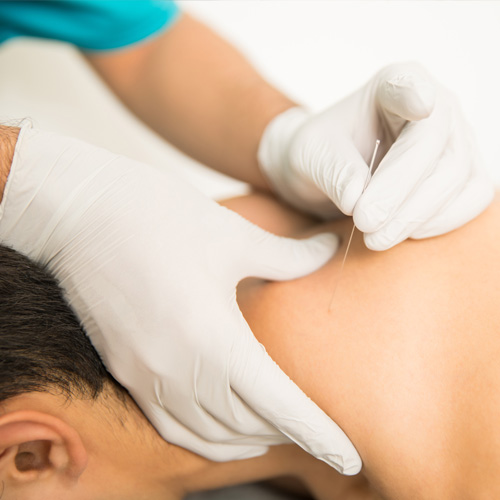
A Brief Introduction to Dry Needling
Dry needling is a technique that uses thin, sterile needles to target trigger points. Trigger points are hyper-irritable restrictions in the muscle and surrounding connective tissue (called myofascia) that can cause pain, limit mobility, and radiate discomfort to other areas of the body.
Dry needling works out these restrictions to help alleviate symptoms. It doesn’t use any medication (which is why it’s called “dry” needling).
You may think it sounds similar to acupuncture, and the two methods do have some commonalities. However, acupuncture is based in traditional Chinese medicine, whereas dry needling is rooted in modern anatomy and neurophysiology.
How Does Dry Needling Work?
Dry needling aims to create a small, controlled muscle response that helps release tension, increase blood flow, and interrupt pain signals. It does this through several mechanisms:
- Interrupts pain cycles by resetting the muscle’s neural input
- Improves blood flow to promote tissue healing
- Reduces inflammation around the affected areas
- Breaks up tight, shortened muscle fibers
- Stimulates natural healing chemicals like endorphins and serotonin
- Supports joint function by improving mobility and muscle balance
Some of the Conditions Treated with Dry Needling
- Low back pain
- Chronic pain syndromes like fibromyalgia or myofascial pain
- Tendonitis and tendinopathy, such as tennis elbow, or Achilles tendonitis
- Other repetitive stress injuries from work or sports, such as rotator cuff injuries
- Plantar fasciitis
- Tension headaches and migraines
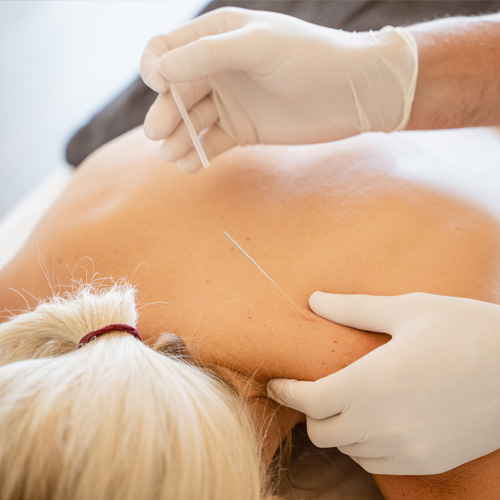
What To Expect from a Dry Needling Session at PhysioWorks
We have two physical therapists, Ross and Michael, who are specially trained in dry needling. If we determine you’ll benefit, they can both help walk you through the process. However, here’s a quick overview of what you can expect.
You’ll get comfortable in the treatment space, and we’ll locate any tissue that’s tight, tender, or painful–those are your trigger points.
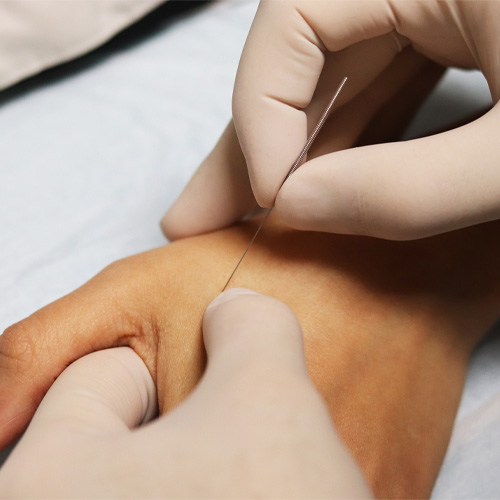
Next, we’ll insert a thin, sterile needle into those trigger points. The muscle may twitch briefly, a sign that it’s responding. Sessions typically last 15–30 minutes, depending on your condition and overall treatment plan.
What About Pain?
Dry needling is not meant to be painful. Some patients experience a mild ache or pressure during insertion. It’s also normal to feel sore for the first 24-48 hours after treatment, similar to how you might feel after a really intense workout. This fades as your body heals and resets.
Is Dry Needling Right for Me?
One of the reasons we love dry needling at PhysioWorks is that it can help address many common musculoskeletal complaints. It also becomes even more effective when combined with manual therapy, therapeutic exercise, and other physical therapy techniques.
You might benefit from dry needling if you:
- Are living with a chronic pain condition, including arthritis
- Need to treat a stubborn soft tissue condition, like tendonitis
- Want to improve your function and mobility after injury or surgery
- Struggle with persistent tension-type headaches
- Have tried other treatment options but couldn’t find relief
Is it Covered by Health Insurance?
Another great benefit of dry needling is that it’s actually covered under many health insurance plans! Be sure to call your provider to double-check (we can also help you navigate the insurance process).
Schedule an Appointment to Learn More
At PhysioWorks, we take a highly individualized approach to physical therapy. We’ll assess your movement, posture, and muscle health and let you know if dry needling will work for you.
If you’re ready to get started, schedule a dry needling consultation with us today. We’re here to help you return to life without restriction!
Healthy Recipe
Shrimp Fried Rice
Enjoy the perfect blend of savory, sizzling flavors with this Shrimp Fried Rice—quick to make and packed with protein, veggies, and mouthwatering taste. It’s a deliciously satisfying way to elevate your weeknight dinner game!
- 1½ cups water
- 1 cup instant brown rice
- 2 tbsp hoisin sauce
- 4 tsp reduced-sodium soy sauce
- 2 tsp toasted sesame oil
- 4 tsp canola oil, divided
- 2 large eggs, lightly beaten
- 8 oz peeled & raw small shrimp
- 2 tbsp minced fresh ginger
- 4 cups stringless snap peas
- 1 medium red bell pepper, cut into ½-inch pieces
- 2 medium carrots, thinly sliced
- 4 scallions, chopped
Combine water and rice in a small saucepan. Bring to a boil over high heat. Cover, reduce heat to medium-low and simmer until the water is absorbed, 10-12 minutes. Spread the rice out on a large baking sheet to cool. Combine hoisin sauce, soy sauce and sesame oil in a small bowl; set aside. Heat 1 tsp canola oil in a large nonstick skillet over medium-high heat. Add eggs and cook, stirring to help break into smaller pieces, until just set, about 45 seconds. Transfer the egg to a bowl. Add another 1 tsp canola oil to the skillet and return to medium-high heat. Add shrimp and cook, stirring occasionally, until pink, 1 1/2 to 2 minutes. Transfer the shrimp to the bowl. Heat the remaining 2 tsp oil in the skillet over medium-high heat. Add ginger and cook, stirring, until fragrant, about 30 seconds. Stir in snap peas, bell pepper, carrots and scallions; cook, stirring occasionally, until tender-crisp, 3 to 4 minutes. Stir in the rice and the reserved egg and shrimp; cook, stirring, until heated through, about 1 minute. Remove from the heat and gently stir in the sauce mixture.
Exercise of the Month
ERGONOMIC STRETCH
Take a quick break and try this ergonomic stretch right at your work desk—it’s a simple way to reduce tension in your neck, shoulders, and lower back. Just a few minutes can improve posture, boost circulation, and help you stay focused throughout the day. Make stretching a part of your routine to feel better and work smarter!
September Word Scramble
tnuamu
plaep
uxqoien
olatbflo
ratesvh
caron
Answer Key
autumn
apple
equinox
football
harvest
acorn


Savor a Pain-Free Football Season
As Friday night lights illuminate the field and the spirit of football echoes throughout the community, ensure that back pain doesn’t get in the way while rooting for your team in the stands. Experience the thrill of the season without the discomfort of back pain. Our treatments are designed for your unique needs, ensuring you’re game-day-ready every time.
Your game plan to tackle back pain involves the following:
- Effective treatments to alleviate pain and guard against future flare-ups.
- Customized strategies to boost your mobility and strength so you can cheer on your favorite teams without hesitation.
- Tips to enjoy those tailgate barbecues and halftime huddles without a second thought to your back.
Get ready to chant, cheer, and celebrate without restraint. Connect with PhysioWorks today, and let’s ensure you’re in prime shape for every touchdown this season!
Follow Us on Social Media!
Staff Spotlight

Danny Beeman
CEO, MPT, CFCE, PGAP

Karl Lange
PT, CFCE, Clinic Director

Luda Moskvich
Lead PTA, COEE

Alicia Ables
PTA, CES




Iryna Hrytsyuk
COTA, Industrial Rehabilitation Supervisor, CI

Natalia Zhuk
COTA/L

Leah Salius
Administrative Supervisor

Michaela Caragiorgio
Billing Supervisor

Sherlyn Dagohoy
Patient Care Coordinator

Jeric Tumaob
Patient Care Coordinator

Michael Kovach
Doctor of Physical Therapy


Christin Hitchcock
Physical Therapist


Cara Thomas
Patient Care Coordinator