


Real Solutions for Back Pain Caused by Herniated Discs
Are you struggling with intense lower back pain? Do you notice that straightening up all the way is painful or impossible? Did this pain start after lifting something heavy or twisting your back? If you nodded ‘yes’ to these questions, you might have a condition known as a herniated disc. Don’t worry; there are proven strategies that can help you feel good again!
Herniated discs are not always painful, but they can be excruciating when they are. Due to the severity of pain associated with a herniated disc, people will try to avoid hurting themselves more and avoid activity. Unfortunately, misguided healthcare practitioners still recommend rest or, worse, bed rest, which is why getting proper treatment is essential!
At PhysioWorks, our team of specialized physical therapists is fully equipped to guide you toward the relief you’ve been seeking, allowing you to get back to the activities you genuinely love without pain!
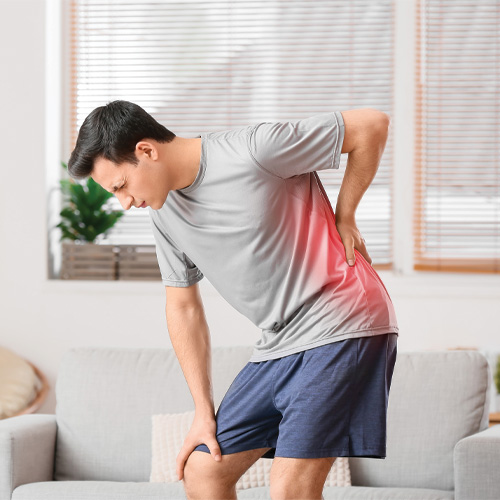
Understanding the Nitty-Gritty of a Herniated Disc
To understand what a herniated disc is, it’s important first to understand the role of spinal discs. Your discs are like shock absorbers in your spine, absorbing compressive forces and permitting smooth, free movements like bending forward, backward, and rotating.
However, as we age, our discs naturally degenerate, begin to dry out, become more stiff, and weaken, becoming more susceptible to herniation. Think of your discs as being like grapes when you’re young and then drying up to be more like raisins as you age.
In addition to age, several variables can elevate your risk of experiencing a herniated disc, including:
Smoking:
Cigarettes are thought to reduce the supply of oxygen to the disc, causing it to break down more quickly than it normally would.
Occupation:
Those engaged in jobs requiring repetitive motions like lifting, bending, and twisting are also more susceptible.
Sedentary Lifestyle:
Long durations of sitting, especially in incorrect postures, contribute to increased risk.
Genetics:
Family history may play a role in increasing the risk of developing a herniated disc.
A herniated disc occurs when the soft, gel-like substance in the middle of the disc breaks through the inner aspect of the disc and protrudes out, usually in the back wall of the disc. This bulging out can pinch the nearby spinal nerves, leading to inflammation and excruciating pain that might even radiate down your leg or arm.
Even when the disc doesn’t affect the nerves, it is infamous for causing sharp and intense pain in the lower back, affecting your ability to move, especially standing upright, and interfering with your overall quality of life. For some, the pain is so unbearable that it hampers even the simplest daily tasks, like sitting, moving, or lying down to sleep.
The silver lining? Our skilled physical therapists can teach you how to manage your debilitating pain and provide the tools to return to a pain-free life!
Effective Solutions for Herniated Disc
At your first visit, one of our experienced physical therapists will perform a comprehensive assessment, including a medical history and physical examination. Afterward, your physical therapist will design a personalized treatment plan specifically for your unique situation that may include the following:
Manual Therapy
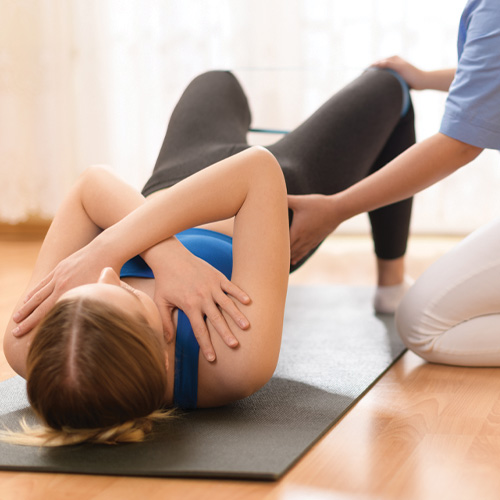
Our physical therapists use passive movement techniques, called mobilizations, to improve the range of motion in the spine, reducing stiffness and pain.
Stretching and Mobility Exercises:
Targeted stretches to improve spine mobility and muscle flexibility are often the starting point. As you move better, you’ll feel better!
Core Strengthening:
Exercises like planks and bridges can help stabilize the spine and help in improving proper techniques when performing movements like squatting or lifting activities.
Neural Mobilization:
Our therapists may use neural mobilization or “nerve gliding” exercises to relieve nerve tension, which can reduce the radiating pain commonly associated with herniated discs.
Understanding the condition and its management is crucial. Our experts often educate the patient about body mechanics, lifestyle changes, and long-term exercise strategies to prevent future episodes. We know that your first step to recovery starts with understanding.
Why Wait?
Call PhysioWorks today for a comprehensive evaluation and learn the steps you can actively take to recover from a herniated disc and guard against future occurrences. Book your life-changing appointment today!
Real Results. Real Recovery.
Nothing speaks louder than the experience of our patients. Here’s what one recent patient had to say about their journey at PhysioWorks.
10 out of 10 would definitely recommend to anybody.
Exercise of the Month
BRIDGING
Begin on your back. Bend your knees and keep your back flat on the ground. Gently, contract your abdominals and hold to keep your back flat as you move up into the bridge position. Remember to breathe. Gently, squeeze your butt muscles and lift your hips off the ground. The goal is to have your hips aligned with your knees and shoulders. Hold for 5 seconds.
3 Sets, 10 Reps.

Strawberry & Banana Popsicles
Cool off with these naturally sweet homemade popsicles packed with fresh strawberries, banana, and creamy vanilla yogurt. They’re refreshing, easy to make, and perfect for hot summer days.
Ingredients
- 1 pound strawberries, washed and stems removed
- 1 large ripe banana
- 1/2 cup vanilla yogurt
- 1/2 cup milk
- Sugar to taste (optional)
Directions
- Add the strawberries, banana, milk, and vanilla yogurt to a blender or food processor.
- Blend until completely smooth and creamy.
- Taste the mixture and add sugar if desired.
- Pour into popsicle molds or small paper cups.
- Insert popsicle sticks or handles.
- Freeze until firm, preferably overnight.
- Enjoy your homemade frozen treat the next day!


Stay Active Without Overheating
Put the cool factor back into your workout routine this summer. Staying hydrated, listening to your body, and making a few smart adjustments can help you exercise safely while continuing to build strength, endurance, and overall fitness.
Cool Down Before You Start
Hop into a cold shower before exercising. Research suggests a pre-workout cooldown can lower your heart rate and body temperature, helping you perform better in hot weather.
Choose Cooler Routes
Walk, run, or cycle on dirt and gravel paths whenever possible. These surfaces absorb less heat than asphalt and concrete, making outdoor workouts feel much more comfortable.
Use Cooling Essential Oils
A few drops of peppermint or eucalyptus oil on your neck and temples can create a refreshing cooling sensation while helping open nasal passages during humid conditions.
Train Smarter With Intervals
Maintain conditioning by exercising at a slightly easier pace while adding short 30-second bursts of speed every few minutes for an efficient workout.
Refuel With Fruit
Watermelon, grapes, cantaloupe, and honeydew contain over 80% water, making them excellent post-workout snacks for hydration and recovery.
Hydrate Consistently
One of the most important summer fitness habits is staying hydrated before, during, and after exercise to help prevent fatigue, overheating, and muscle cramps.
Make Summer Your Strongest Season Yet
With the right preparation and a few heat-smart strategies, you can continue exercising safely throughout the summer while enjoying all the benefits of an active lifestyle.
Follow Us on Social Media!
Staff Spotlight

Danny Beeman
CEO, MPT, CFCE, PGAP

Karl Lange
PT, CFCE, Clinic Director

Luda Moskvich
Lead PTA, COEE

Alicia Ables
PTA, CES




Iryna Hrytsyuk
COTA, Industrial Rehabilitation Supervisor, CI

Natalia Zhuk
COTA/L

Leah Salius
Administrative Supervisor

Michaela Caragiorgio
Billing Supervisor

Sherlyn Dagohoy
Patient Care Coordinator

Jeric Tumaob
Patient Care Coordinator

Michael Kovach
Doctor of Physical Therapy


Christin Hitchcock
Physical Therapist


Cara Thomas
Patient Care Coordinator